Growing up my walls we’re blank. To protect the paint. The first bedroom I decorated was my mold infested london basement apartment. I plastered the walls with whatever I could get my hands on. Personal works, a triptych of blue nudes (Picasso, Matisse, Unnamed digital artist), a calendar of Audrey Hepburn, a dyptych of Black and White photos (the streets of manhattan and its visual twin - waves on a beach), a series of film photos taken by my sister 10 years prior, but most prominent were the countless cutouts from Atlantic articles.
My uncle gave me a subscription to the magazine after I’d torn through the incredible article Double Blind, which if you have not read is far more worthy of your time than what is to come.
Even though at the time, I was merely looking for aestheticly pleasing images for decoration, the topicality of the actual articles and the art that supplemented them has allowed for a visual reminiscence on the events that defined my years in London.
As I moved out, I tore the images from my walls. The paint often coming with, the images suffering tears and rips, the cost of having been permanently installed.
Soon after moving out I ended up at the Cooper Hewitt gallery, spending long enough in the library for my friends to leave me, reading a few books but namely Marshall Brown’s The Architecture of Collage. Upon my return home, filled with inspiration for a use for my torn up wall decor, I set to work.
The first collage, pulled images from articles about covid, alpinism, fraying European relations, museum ethics, and the last generation of children with down syndrome.
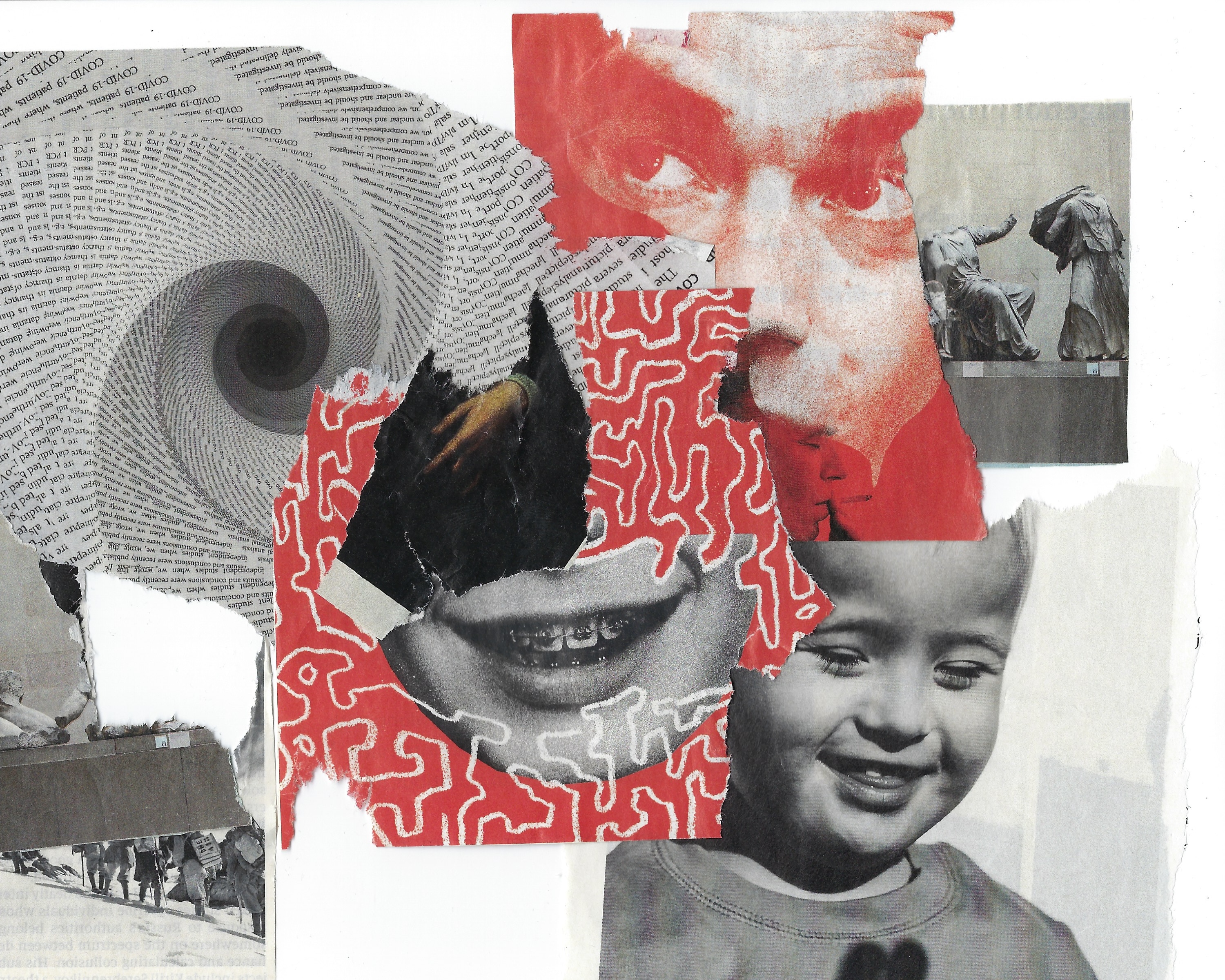 Figure 1. The Host
The second pulls from the same article about children with down syndrome, an article on data policy, and two articles I don’t remember.
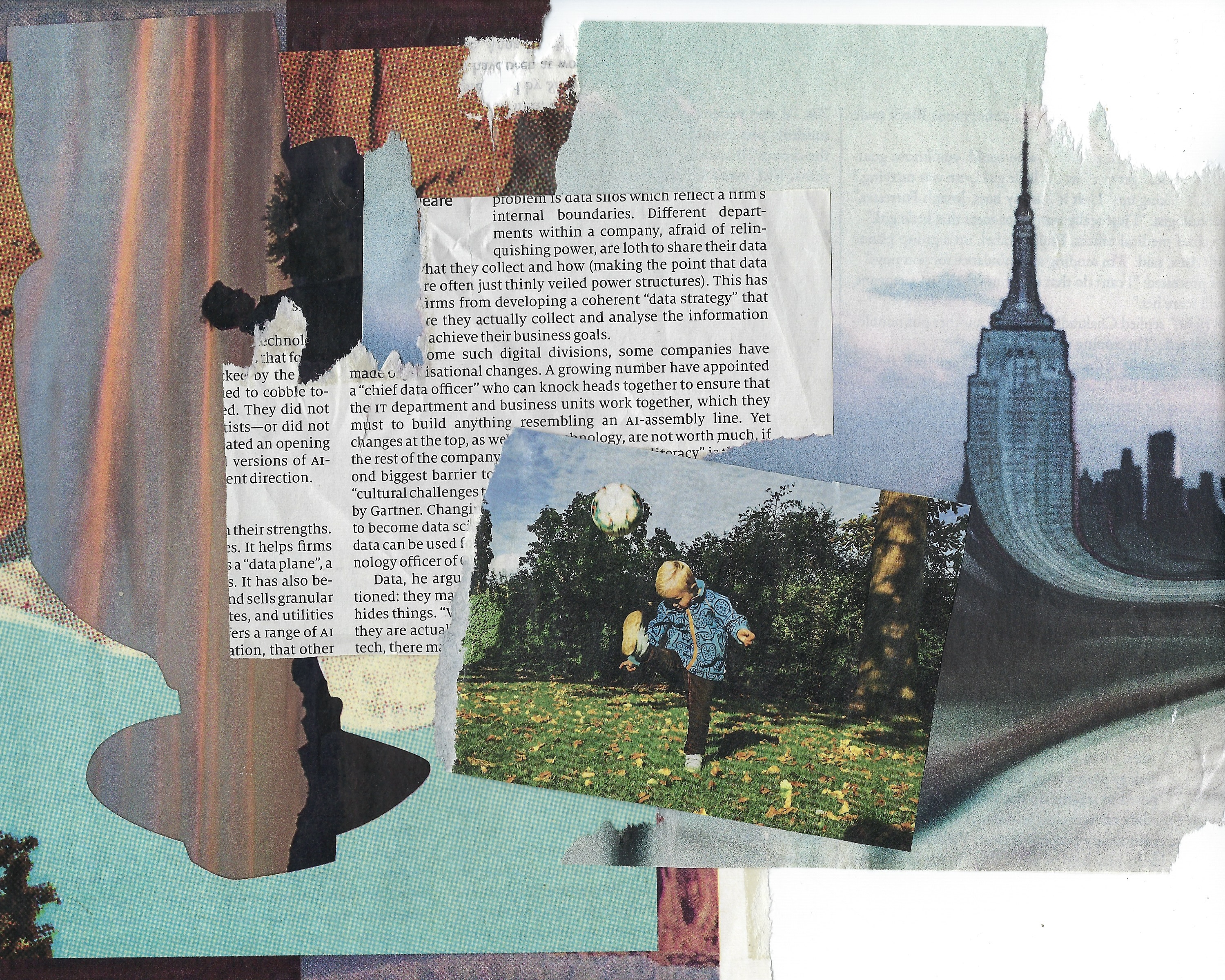 Figure 2. Digital Divisions
I found further meanings in the juxtopositions of images with articles imbuing meaning beyond the visual. The third collage pulled from an article on “black” television, the return of Eddie Murphy, and ecology.
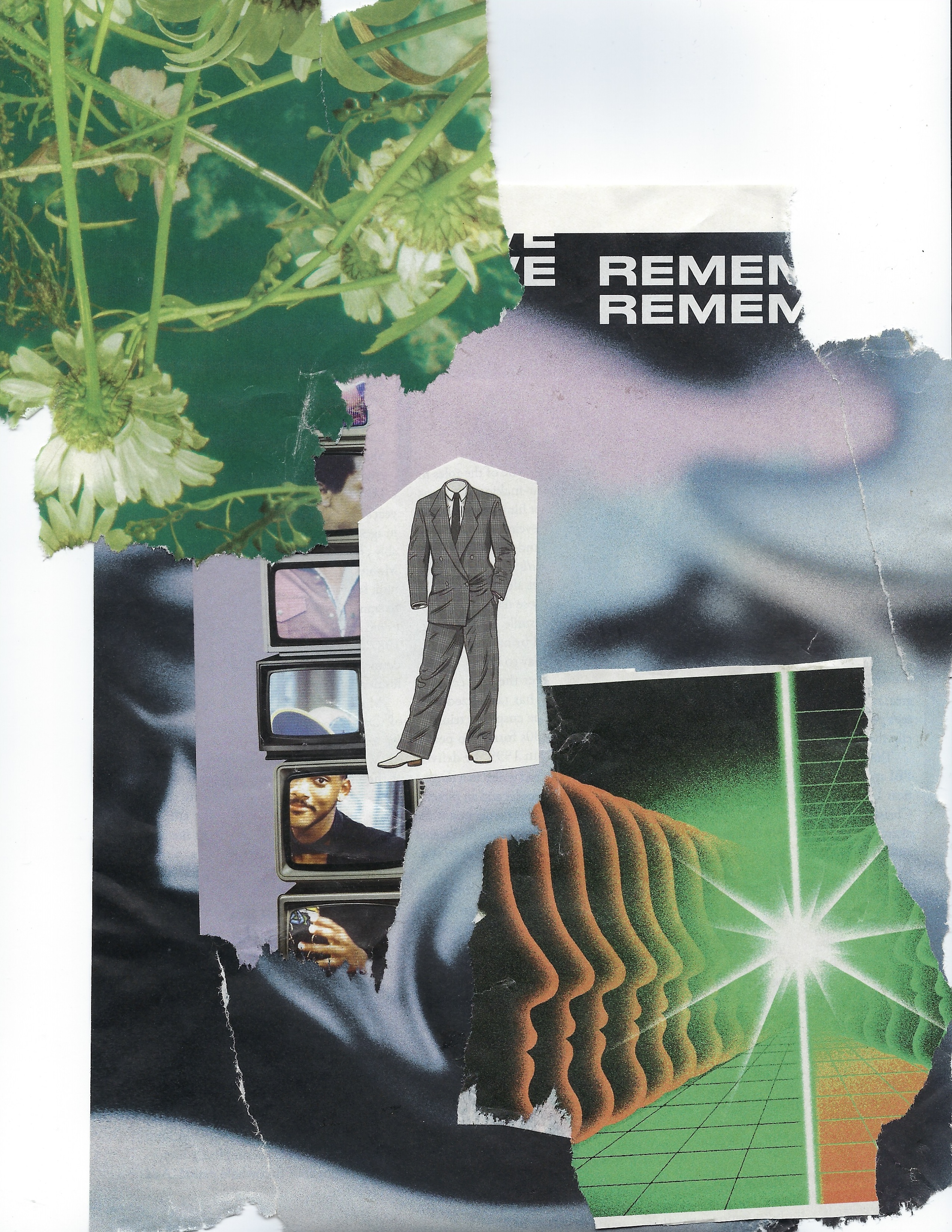 Figure 3. We remem
The fourth to be frank, I cannot remember.
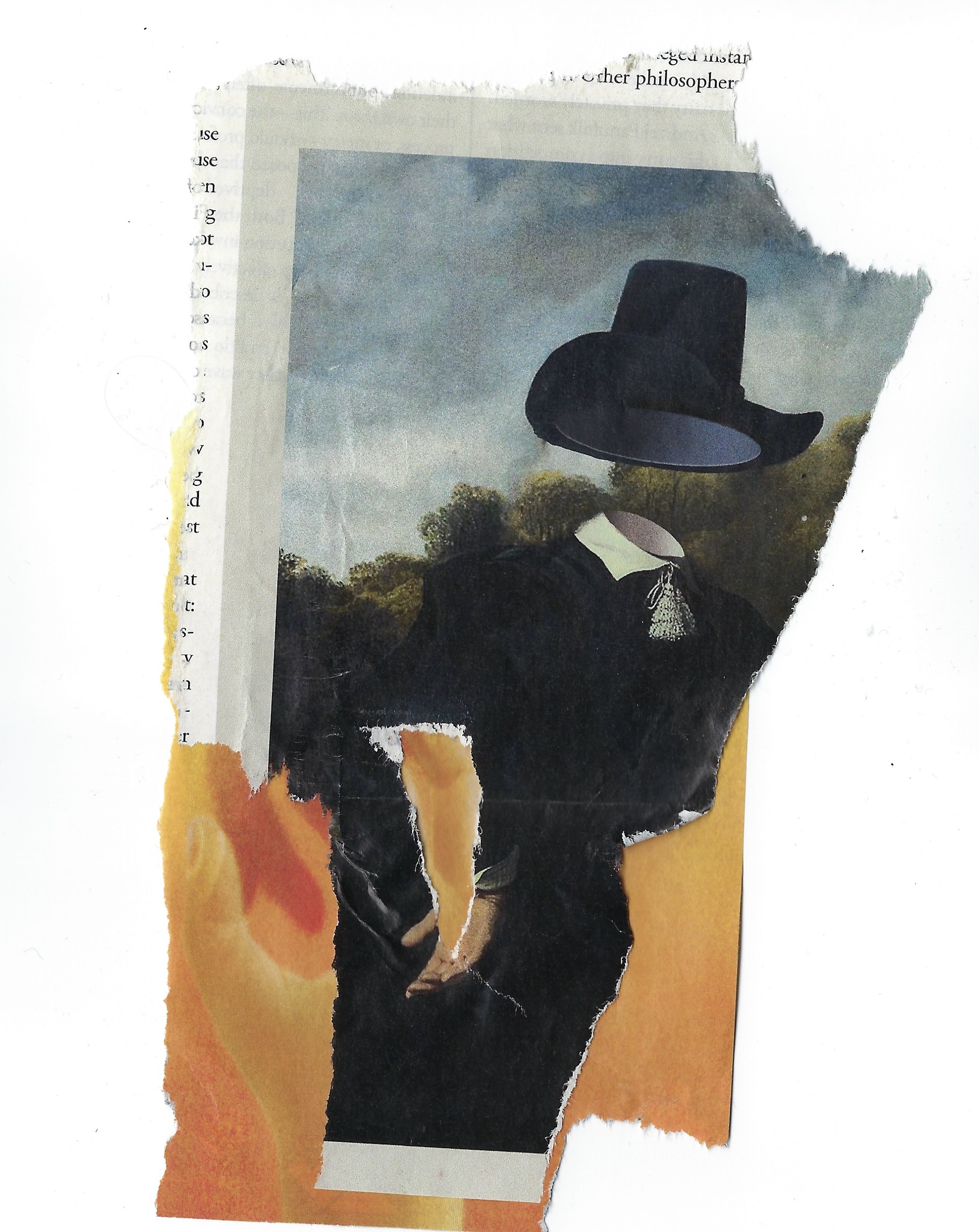 Figure 4. Other Philosopher
The fifth I remember quite well. The central focus, a child pulled apart by his parents divorce, the same article on down syndrome, and an article on the ethics of priority setting in Covid. The collage becomes an examination of the reach of the legal system, tradeoffs, and biological morality.
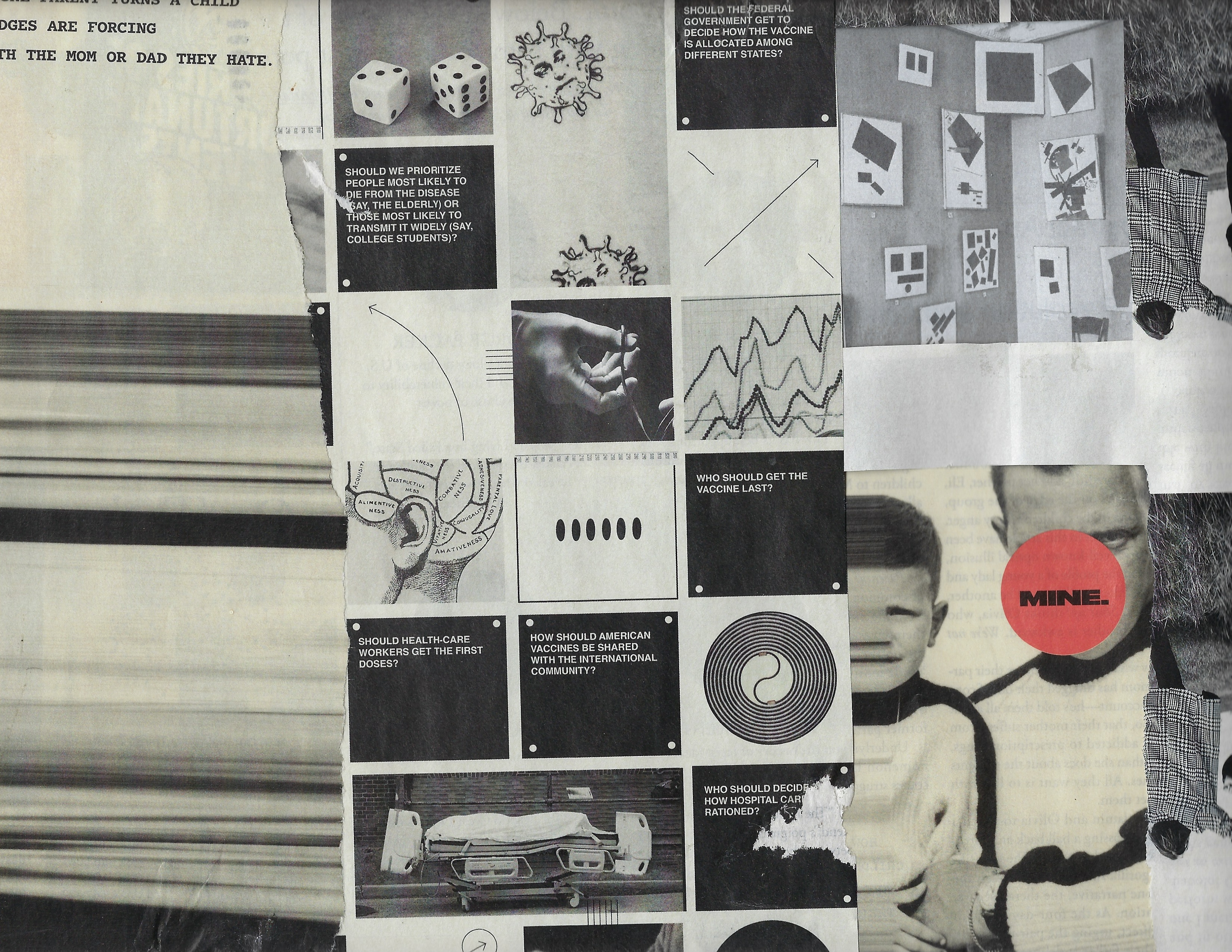 Figure 5. Mine
The final, reuses many of the visual elements of the Covid article in the previous piece. Three color swatches, and a cutout from an essay I wrote on the pragmatist philosophy of Malevich’s Black Square. The color swatches extend the space of Malevich’s exhibition to include the Atlantic visual elements. The visual similiarity is meant to draw compairisions to the historical time periods.
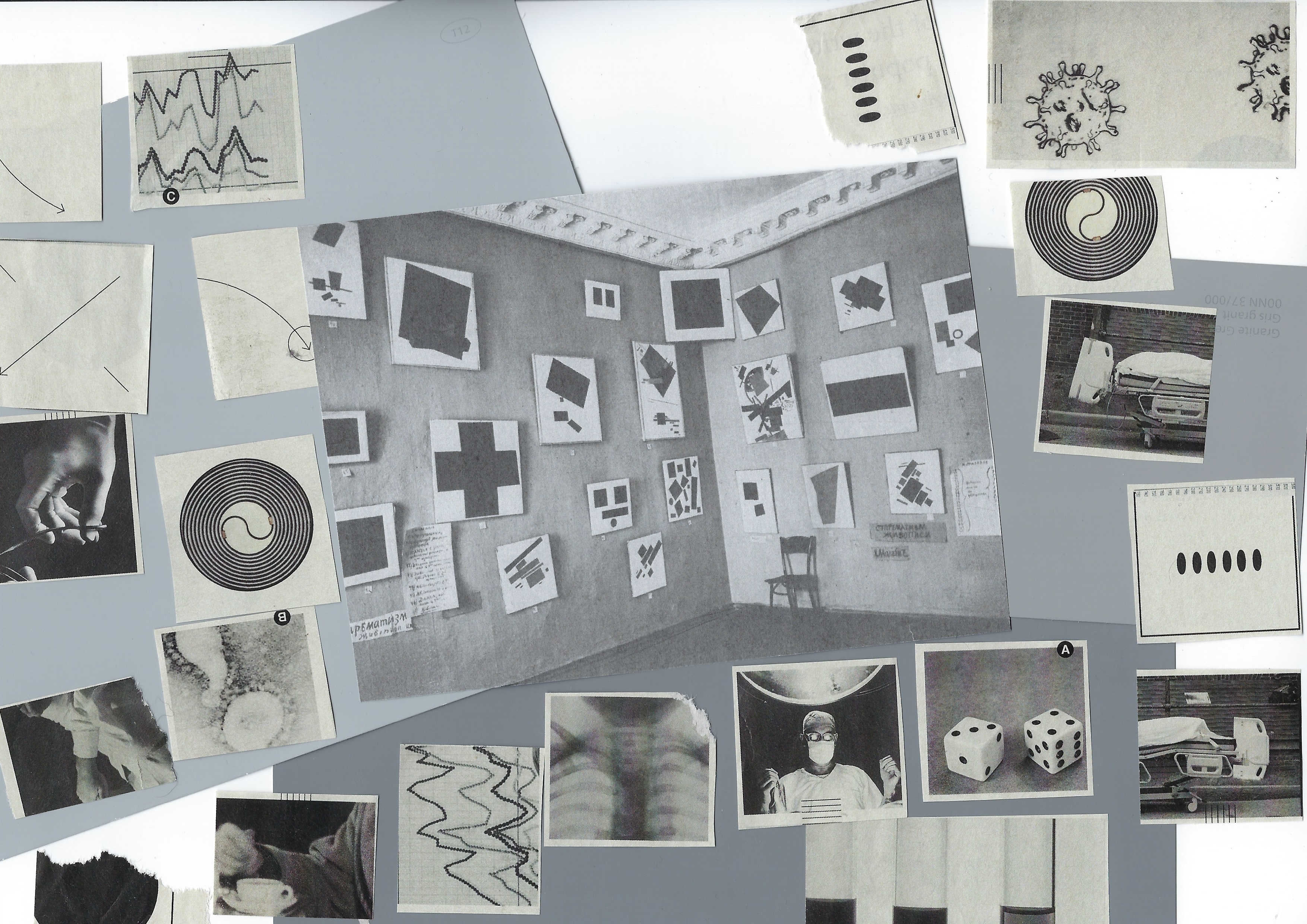 Figure 6. Gris Granit
With exception of the final work, which was significantly more intentional, these works used only the shapes created by the removal from my wall. Exploration of this constraint space, in conjunction with more often than not a personal connection to the written work, allowed for a deep reflection on the defining formative years of my life.